…when I stood on that high ledge this morning and viewed the land before me, I distinctly felt that rarer, yet unmistakable feeling – the feeling that one is in the presence of greatness.”
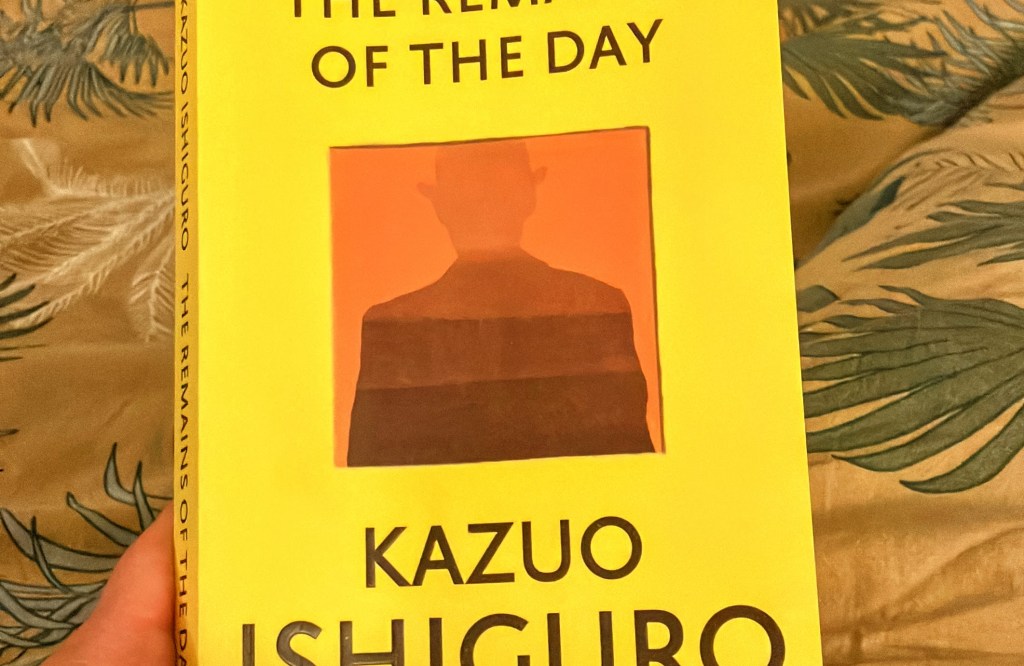
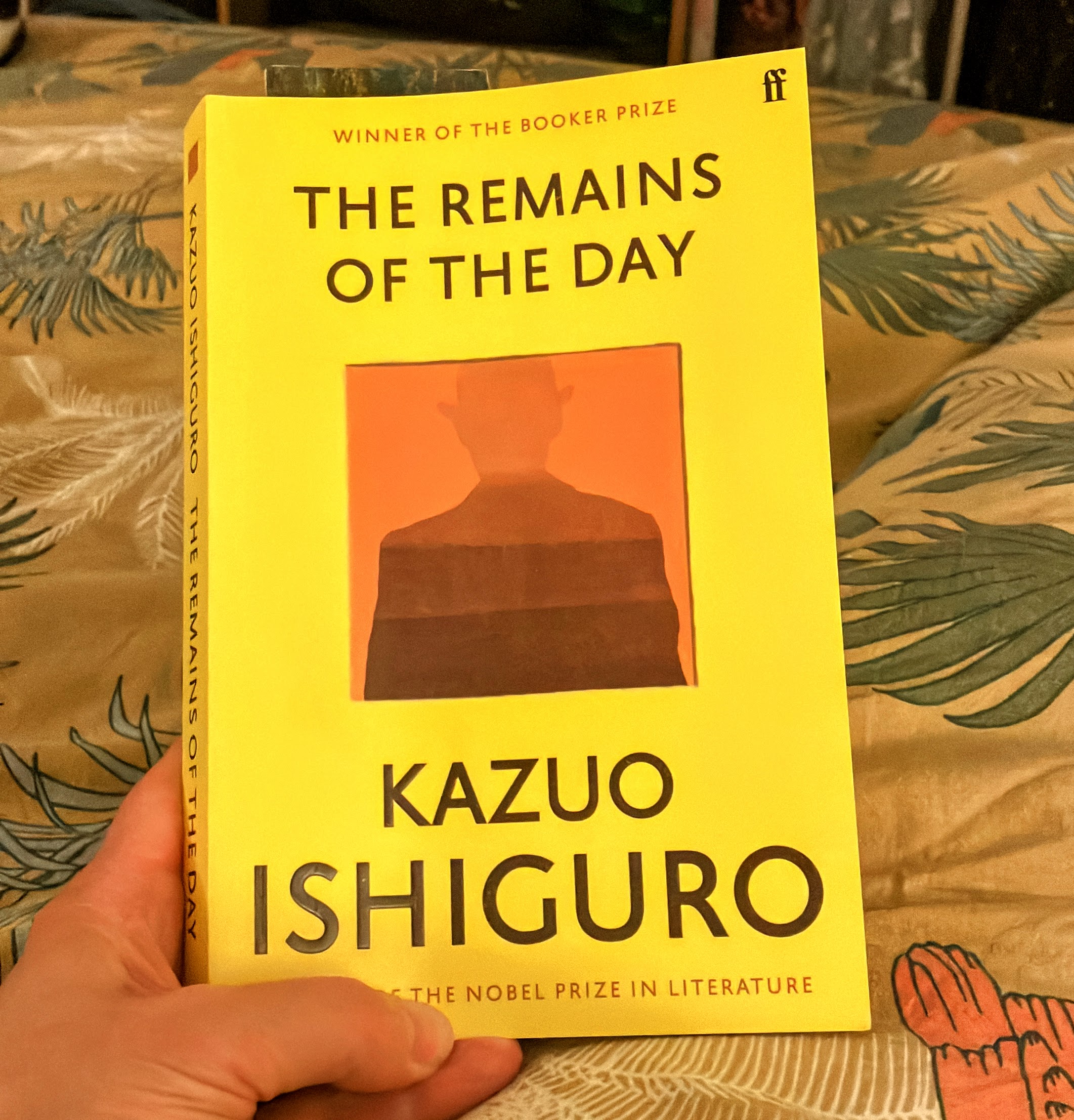
The Remains of the Day by Kazuo Ishiguro
Synopsis
At the end of his three decades of service at Darlington Hall, Stevens embarks on a country drive, during which he looks back over his career to reassure himself that he has served humanity by serving ‘a great gentleman’. But lurking in his memory are doubts about the true nature of Lord Darlington’s ‘greatness’ – and graver doubts about his own faith in the man he has served.
Kazuo Ishiguro’s moving portrait of the perfect English butler, his loyalty and his fading, insular world in post-war England, won the Booker Prize in 1989.
About the author
Kazuo Ishiguro is an award winning author who was born in Japan in 1954. He moved to Britain at the age of five. His debut novel, A Pale View of the Hills was published in 1982. This was followed by An Artist of the Floating World in 1986. Over the years, Kazuo has won many awards including The Booker Prize in 1989 for The Remains of the Day and The Nobel Prize in Literature in 2017. As well as novelist, Kazuo is also a screenwriter and song writer.
“who, in novels of great emotional force, has uncovered the abyss beneath our illusory sense of connection with the world”.
Press release. NobelPrize.org. Nobel Prize Outreach 2026. Tue. 26 May 2026.
Back in April, I read my very first novel by Kazuo Ishiguro. It was the 2005 published, Never Let Me Go. I have noticed that although I wrote about this novel in my reading journal, I have omitted to include it on my blog so do look out for that post in the near future. Anyway, I absolutely loved how Kazuo wrote and The Remains of the Day has always been on my mind to read. The film caught my attention (I haven’t seen it but intend to at some point) as I adore both Emma Thompson and Anthony Hopkins so the book has been there in the back of my mind just waiting until it was time. I have several books by the author in the Library at school and so it happened that just as I was leaving for my Easter break, Never Let Me Go decided that it was time to be read. I picked it up and devoured it very quickly. I loved it so much that I had no difficulty in deciding that The Remains of the Day would make an excellent choice for one of our upcoming staff book club choices. And so it was that I came home clutching my copy last week and just fell into this wonderful, moving, exquisitly written story, until, with a sadness that often comes when I have loved a book, I reached the final sentence yesterday.
The novel is set over six days as we embark on a journey with our narrator, Stevens, as he travels from his home and place of work, Darlington Hall, to the West Country to meet Miss Kenton, an old colleague. Stevens has been a butler at Darlington Hall for decades. For many years he served Lord Darlington who died three years previous. As he reminisces over the years, there is a sadness that creeps in as Stevens questions both his memory at times and also the man he has dedicated his life to serving. He often reminds us that what his employer did, there was goodness at it’s heart. We see, through Steven’s recollections, Lord Darlington welcome prominent figures into his house in an effort to avoid further conflict with Germany. His actions heavily influenced by what he witnessed in the aftermath of the First World War and the information he is now being fed by those whose motives are dubious to say the least. Relationships are forged that will later see his lordship fall from grace despite acting in, what he believes at the time, to be in the best interests of the country after his faith in democracy have been shaken.
‘What is more, sir,’ his lordship went on, ‘I believe I have a good idea of what you mean by “professionalism”. It appears to mean getting one’s way by cheating and manipulating. It means ordering one’s priorities according to greed and advantage rather than the desire to see goodness and justice prevail on the world. If that is the “professionalism” you refer to, sir, I don’t much care for it and have no wish to acquire it.’
It is interesting to see these events through the eyes of a butler and one whose beliefs are entrenched in the past and who is now having to navigate his way through a world that has changed greatly and continues to change. I think Kazuo Ishiguro has a wonderful ability to create a voice for his characters that are so convincing and so engaging that they feel instantly alive. I felt for Stevens and his life felt claustrophobic to me. This small world that he inhibited and yet felt so large through the reach the events he witnessed had. Now, so many years later, the past is a ghost that follows him when he embarks on his trip. He is taking a very rare holiday. He has no doubt, up until then, seen very little of the world outside of Darlington Hall. Sometimes when we are on the outside looking in the view can be very different indeed. It is almost a pilgrimage, this trip to meet Miss Kenton. There is a feeling of things left unsaid. Is there a love story also at it’s heart? I would say so and the ending was bittersweet in the most delicate of ways, and in my mind couldn’t have been more perfect. There is sadness, yes, but I did feel a little hope. I felt I left Mr Stevens ready to embrace what was left of his life and continue to lead it in the best way he knew how. Regret is there, I believe that but what person doesn’t look back and think that things weren’t quite as seemed when they were caught up in the moment?
So what is The Remains of the Day really all about? Misplaced trust, honour, living a life with dignity and passion. Missed opportunities. Being so caught up in duty and what is ‘right’ that you miss what is right in front of you. It is about love, loss and regret. It is all these things and, I think, that the way Kazuo Ishiguro has presented these events in history through a story that is very human, very relatable, is very clever indeed.
Nearly forty years ago now, Kazuo Ishiguro wrote a novel that brilliantly portrays the demise of the grand country house, a class system, a changing country and a way of life that had become outdated. It is delicately done. The relationships are fragile. Much is left unsaid and yet so much is told through the absence of words. Now, as I read it for the first time all these years after it was first published, I find it is beautiful, thought-provoking and like the ghost that followed Stevens on that trip, will stay with me forever. A modern classic for sure.
Strange beds are rarely agreed with me…”
If you would like to learn more about this author then may I recommend the following websites for further reading: