
Today I am absolutely thrilled to be kicking off the blog tour for Green Gold by Gabriel Hemery In 1850, young Scottish plant hunter John Jeffrey was despatched by an … Continue reading Green Gold by Gabriel Hemery
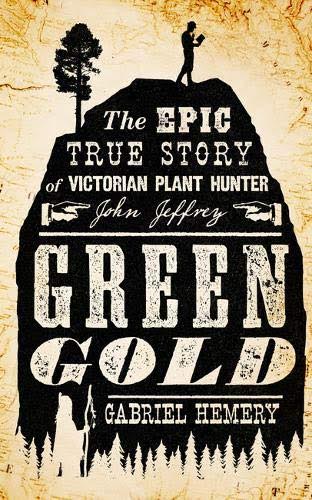
Today I am absolutely thrilled to be kicking off the blog tour for Green Gold by Gabriel Hemery In 1850, young Scottish plant hunter John Jeffrey was despatched by an … Continue reading Green Gold by Gabriel Hemery
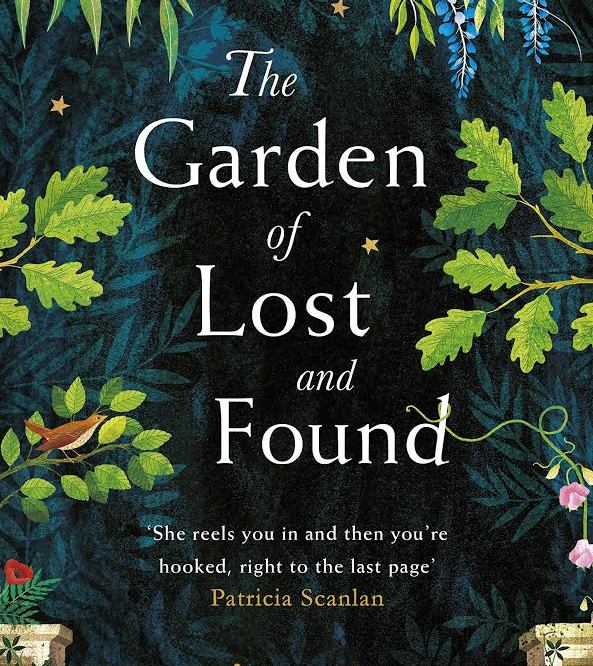
This evening I’m thrilled to be a part of the blog tour for the latest novel by Harriet Evans, The Garden of Lost and Found. From the moment I held … Continue reading The Garden of Lost and Found by Harriet Evans
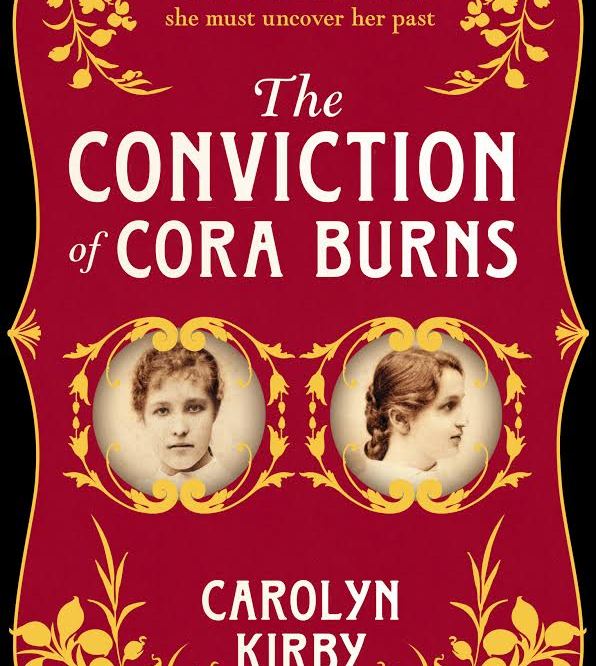
Birmingham, 1885. Born in a gaol and raised in a workhouse, Cora Burns has always struggled to control the violence inside her. Haunted by memories of a terrible crime, she … Continue reading The Conviction of Cora Burns by Carolyn Kirby
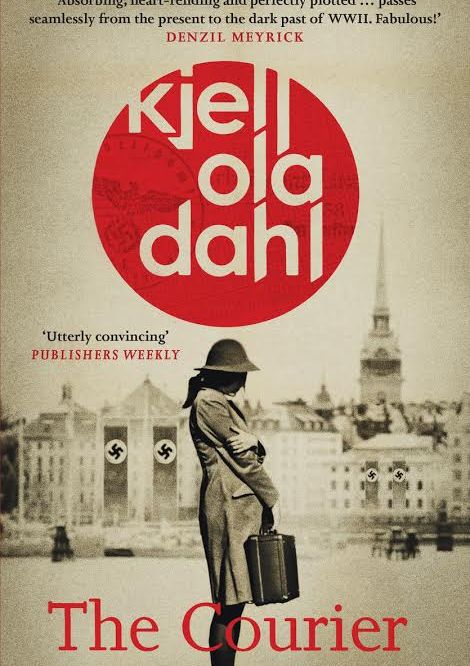
‘This is what dying is like, she thinks. You have gone and the world doesn’t care. You die and others eat pastries.’ In Oslo in 1942, Jewish courier Ester is … Continue reading The Courier by Kjell Ola Dahl
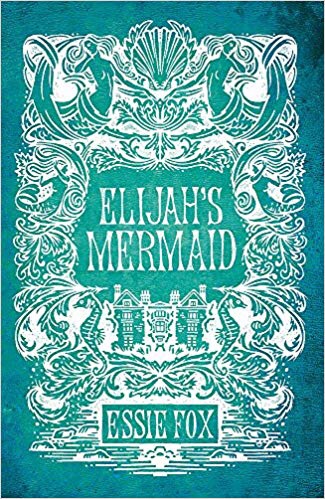
I have always loved gothic fiction so it seemed only right that I include some in my recommended reads. Essie is a historical author and as well as her captivating … Continue reading Essie Fox – Elijah’s Mermaid and The Last Days of Leda Grey
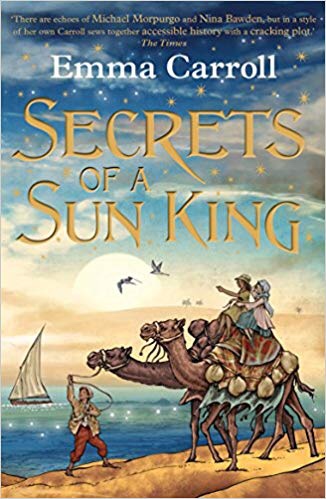
Emma is one of the best authors in historical fiction for children. Her first novel, Frost Hollow Hall, was published in 2013 and she has been inspiring children (and adults) … Continue reading Secrets of a Sun King by Emma Carroll
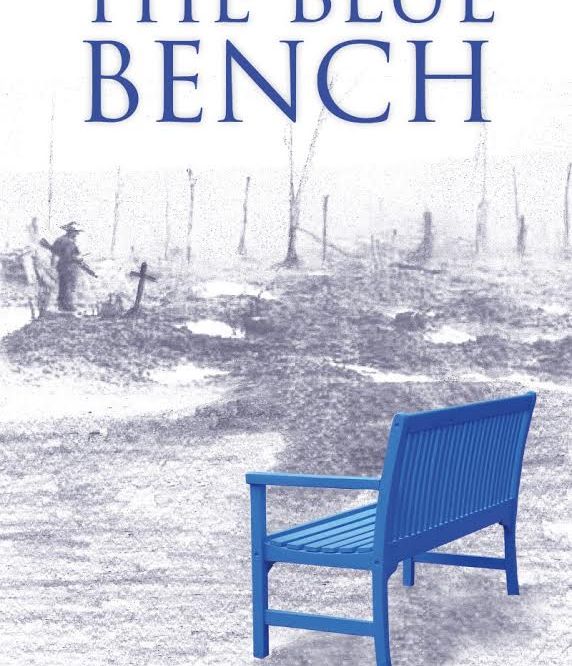
Today I’m delighted to be taking part in the blog tour for The Blue Bench by Paul Marriner, a story that is especially poignant in this, the 100th anniversary since … Continue reading The Blue Bench by Paul Marriner

Some years ago I came across Thomas de Quincey, author of Confessions of an English Opium-Eater. It was a fleeting moment within my studies but he has lingered somewhere in the depths of my mind and I thought that one day I would like to discover a little more about the man who not only shared such an intimate and scandalous memoir but was also friends with William Wordsworth. I was therefore greatly delighted when Holland House publishers sent me a novel by the name of The Alphabet of Heart’s Desire by Brian Keany.
 This is a novel born from true events in de Quincey’s life but it is a gloriously imagined work of fiction. When de Quincey was only 17 years old he ran away from his family and their expectations of what his future should be and spent some time in London. In Confessions of an English Opium-Eater de Quincey recounts how he met a young street girl (Ann of Oxford Street) and it was this passage that lit the spark for Keaney’s novel. I must say I thought the novel rather wonderful and it has reignited my desire to explore de Quincey further.
‘I am nobody of consequence,’ the stanger replies. ‘I am only here to give you this.’ He holds out his hand and in his open palm there nestles a small silver locket upon a chain. ‘She asked me to return it to you, at the very end.’
A visitor calls with a gift and a message from the past…
In 1802 Thomas de Quincey, a young man from a comfortable middle-class background who would go on to become one of the most celebrated writers of his day, collapsed on Oxford Street and was discovered by a teenage prostitute who brought him back to her room and nursed him to health. It was the beginning of a relationship that would introduce Thomas to a world just below the surface of London’s polite society, where pleasure was a tradeable commodity and opium could seem the only relief from poverty. Yet it is also a world where love might blossom, and goodness survive.
The lives of a street girl, an aspiring writer, and a freed slave cross and re-cross the slums of London in this novel about the birth of passion, the burden of addiction, and the consolations of literature.
A young man taken far away from everything and everyone he has ever known and sold to the highest bidder; a young girl living in squalor, who chooses to run away to a brothel rather than endure the abuse of her mother’s lover; and a young man desperate to find his own path and not be bullied into a life without passion or creativity. Through the lives of each of these characters we are taken back through the mist and fog to early 19th century London. A London where death came early to many through illness or violence. This is a richly woven story with some wonderful characters. It is incredibly vivid and beautifully written and I felt it a celebration of the written word not only in the way Brian Keaney shares the story with us, but as an underlying theme that runs through the novel.
He lived extremely frugally, spending nothing on his own attire or his appearance beyond what was necessary to preserve a degree of respectability, or on furnishings for the house or shop. Reading was his sole recreation. He brought books and he read them. In time, I came to appreciate the wisdom of this way of living, and to make it my own. Between us we sought to work our way through the great pile of books that littered the upstairs of the house. But we never came anywhere near exhausting the volumes in Archie’s makeshift library for their number was always growing.
The novel is incredibly dark at times and I can fully understand why these characters would need the written word to escape their reality. Harsh and unkind as it quite often was, yet amongst the darkness there was kindness, hope and love. Something that can be difficult to see in times of hardship. The London that Keaney brings to us is corrupt and filled with crime and selfishness. It brings to mind Wordsworth’s sonnet London, 1802 in which he laments the capital and how it has lost its way.
Milton! thou shouldst be living at this hour:
England hath need of thee: she is a fen
Of stagnant waters: altar, sword, and pen,
Fireside, the heroic wealth of hall and bower,
Have forfeited their ancient English dower
Of inward happiness. We are selfish men;
Oh! raise us up, return to us again;An excerpt from London, 1802 by William Wordsworth
I feel that Keaney has captured the tone of the city at this time. The despair and darkness that many lived with and the effects of drug addiction. A thought provoking, interesting novel and one that I thoroughly recommend.
This is the first time I have read anything by Brian Keaney although he had written many books for children, YA and The Alphabet of Heart’s Desire is his first book for adults. I very much look forward to reading more from him in the future.
You can find out more about Brian Keaney by visiting his website here.
The Alphabet of Heart’s Desire was published by Holland House Books in November 2017.
Thank you so much to Holland House Books for sending me a review copy of The Alphabet of Heart’s Desire.
Last Letter from Istanbul is the latest offering from Sunday Times bestselling author, Lucy Foley.
Just gorgeous, this is a story to shine a light in the darkness, even in moments of despair.
Constantinople in 1921 is a confusing, often frightening place to be, in the first few pages, two reports from 1918, perfectly sum up the two opposing sides, each report almost interchangeable. Nur’s house is in the hands of the British and being used as a hospital, she finds her thoughts on the occupiers altering and conflicted when she takes an orphan in her care to be treated by George Munroe. Five separate yet entwined stories exist side by side, different time frames ensure the past spears the present, while the future whispers to the past. Lucy Foley has developed a beautiful writing style, the vivid colour stamps it’s impression on the pages, conjuring taste, touch, smells and sounds, as well as creating a feast for your eyes.
As the book began to come to a close, it felt as though two trains were on an inevitable collision course. The sweeping horror of war and occupation, both momentous and insidious, is clearly felt, yet it is the intimate, the individual connections, that were the highlight of this read for me. ‘Last Letter from Istanbul’ caresses, sparks and skewers thoughts and feelings, it is a truly penetrating and captivating read – highly recommended.
Synopsis:
Constantinople, 1921
Each day Nur gazes across the waters of the Bosphorus to her childhood home, a grand white house, nestled on the opposite bank. Memories float on the breeze – the fragrance of the fig trees, the saffron sunsets of languid summer evenings. But now those days are dead.
The house has been transformed into an army hospital, it is a prize of war in the hands of the British. And as Nur weaves through the streets carrying the embroideries that have become her livelihood, Constantinople swarms with Allied soldiers – a reminder of how far she and her city have fallen.
The most precious thing in Nur’s new life is the orphan in her care – a boy with a terrible secret. When he falls dangerously ill Nur’s world becomes entwined with the enemy’s. She must return to where she grew up, and plead for help from Medical Officer George Monroe.
As the lines between enemy and friend become fainter, a new danger emerges – something even more threatening than the lingering shadow of war.
Last Letter From Istanbul will be published by HarperCollins on the 5th of April 2018.

Oh my, this is a fascinating, darkly powerful novel with biting attitude, set in Victorian Edinburgh. In the laboratory above a newly opened pharmacy, a wonder-drug is created, as the pharmacist experiments, his wife of six months discovers a world she couldn’t have imagined. Kindness and love sit at the very heart of this novel, however light can be so easily doused, and a bleak and twisted shadow menaces the pages. This may be a blistering Victorian drama, yet the characters feel so very real, their thoughts and feelings could easily be exposed today. Vanessa Tait writes with a provocative, combative pen, my mind flinched, my heart ached, and yet hope existed within the very centre of my being. Raw, elemental and disturbing, The Pharmacist’s Wife is an entirely captivating and enthralling read – highly recommended.
The Pharmacist’s Wife will be published by Atlantic Books on the 5th April 2018.
 Tales Before Bedtime